
What drew you to children's development?
I grew up in a family of musicians in Slovakia, and I was drawn early on to patterns: the rhythm beneath a piece of music, or beneath the rain on a window. When I began teaching, first in early years settings in Slovakia and later with children aged 3 to 19 in the UK, that instinct turned towards people. Working in specialist provisions for pupils with significant emotional needs, I wondered why some children found their footing despite real difficulty, while others struggled in ways no rule or reward chart could reach.
Again and again, the answer seemed to lie in the quality of their relationships with the adults around them. That question led me back into formal study, first in psychology and neuroscience at Birkbeck, then in clinical neurodevelopmental sciences at King's College London, to understand the science behind what I was seeing every day.
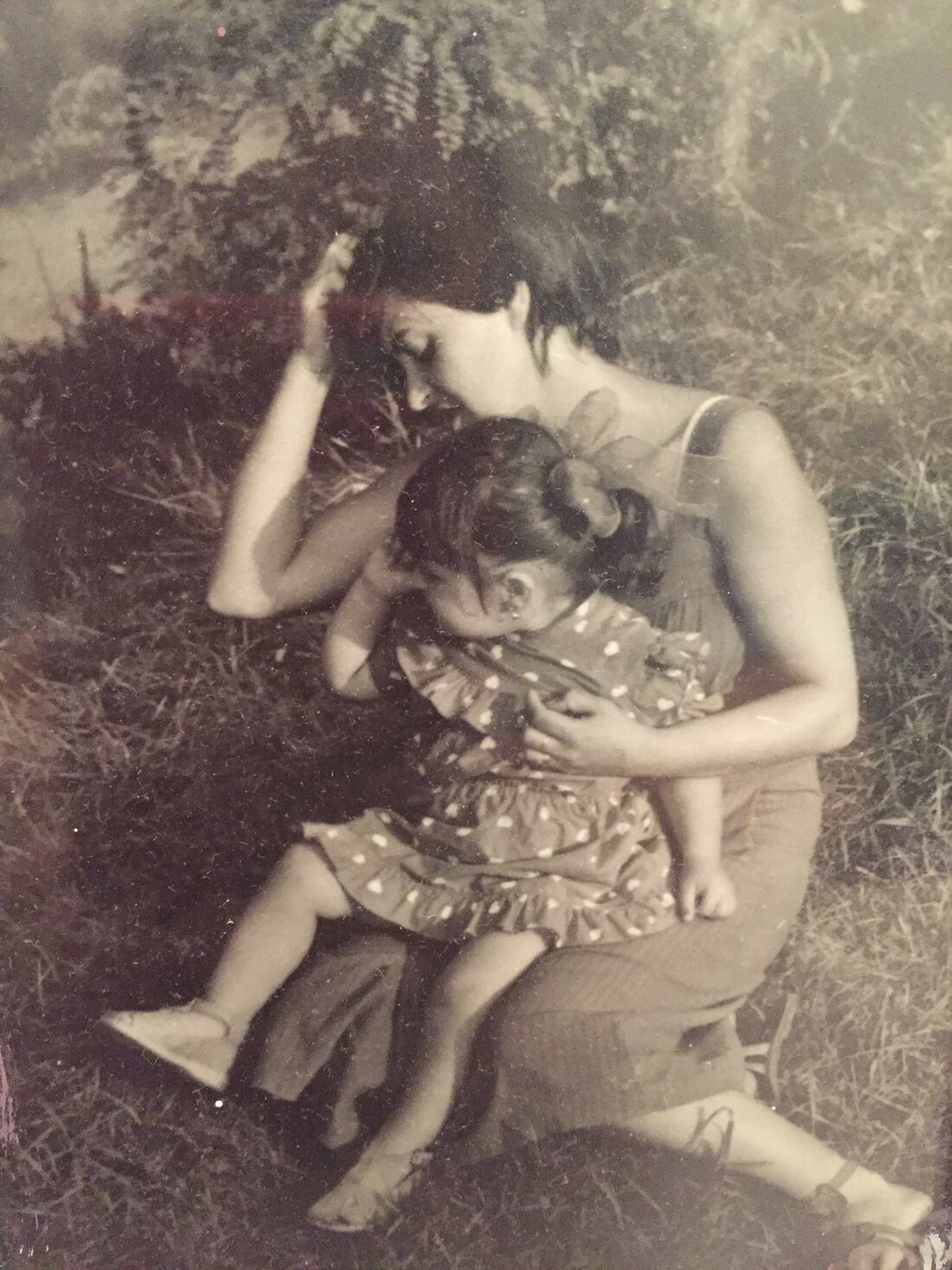
In the course of my career, I have become increasingly convinced that the most meaningful progress comes from working alongside families and practitioners, rather than studying children's lives from a distance.
How do you bring research and family life together?
My work focuses on three interconnected areas: how parents' responsiveness shapes children's emotional and cognitive development, how parental mental health and the wider family environment influence those early pathways, and how that evidence can be translated into support families can actually use.
I am completing a PhD at King's College London's Institute of Psychiatry, Psychology & Neuroscience, using data from the Developing Human Connectome Project. My research has been published in the Journal of Affective Disorders, and I was the inaugural recipient of the Psychiatry Research Trust's Claire Nacamuli Prize for early-career research on postnatal depression.
I have always believed that the purpose of research is to change something in a family's everyday life, not only to describe it. That is why, alongside my research, I have spent more than ten years working with families in hospital, school and community settings, from the Mother and Baby Unit at Bethlem Royal Hospital to the National Autism Unit at the Maudsley. For almost a decade I also worked part-time as a CAMHS clinician, carrying out assessments in triage and in clinic, and I hold certificates in the Newborn Behavioural Observation (NBO), the Newborn Behavioural Assessment Scale (NBAS), video interaction guidance, ADOS and ADI-R. Today I lead strategic work for maternal and perinatal mental health services in Kent and Medway.
"The purpose of research is to change something in a family's everyday life, not only to describe it."
How will The Space In Between help families?
Parents today are raising children amid rising childhood anxiety, stretched services and a constant stream of conflicting advice. These pressures rarely arrive one at a time; they build on one another, and they land on families who are often already exhausted. I believe the support we offer parents has to be equally joined-up.
Bump Start showed me what that can look like. As Research and Development Manager at the Brazelton Centre UK, I led this antenatal programme with Romsey Mill's Young Parents Programme in Cambridge, co-producing it with young parents and researchers to help new mothers and fathers read and respond to their baby's cues. Rather than remaining a research project, it was later expanded within NHS services.
The Space In Between applies the same principles to everyday family life. It is psychoeducation, not therapy: I do not diagnose children or hand parents a script. Instead, I translate developmental science into language parents can use at home, and I facilitate the weekly group calls myself, so that parents learn alongside others who understand.
Has your approach changed over time?
The most important lesson I have learned came not from the lab or the clinic, but from home.
When my daughter began experiencing significant anxiety at school, I had already spent more than a decade studying and working in child development. I knew the research. I had worked in some of the UK's leading specialist services. And yet, in the middle of real family life, I found myself asking the question so many parents ask: what does my child actually need from me right now?
Finding the answer, which eventually meant deciding to homeschool her, changed how I work. Earlier in my career, I thought primarily about producing rigorous evidence. That remains essential, but I now give equal weight to what parents already know about their own child.
"Science is most useful when it is held alongside what parents already know, not placed above it."
This has fundamentally changed how I conduct research. I increasingly work through long-term research-practice partnerships in which communities and decision-makers help shape the questions we ask, the interventions we design, and the way we interpret findings. This approach has also influenced my teaching. I encourage students to think beyond statistics and ask whether their research is useful, culturally grounded, and capable of improving people's lives. For me, the highest standard of scientific excellence is achieved through theoretical grounding coupled with methodological rigor and real-world relevance.
What do you hope The Space In Between will become?
My hope is that The Space In Between will become a platform where researchers, governments, practitioners, parents and communities work together to develop solutions that allow children to thrive in an increasingly complex and rapidly changing world.
Closer to home, my hope is that it becomes a place where the rigour of developmental science and the wisdom of parents meet as equals. I want families to leave not with more rules to follow, but with a clearer understanding of their child and greater confidence in themselves.
Beyond this programme, I hope to contribute to mentoring parents and the next generation of social scientists, encouraging them to use interdisciplinary frameworks, methods, and collaborations — not only to address global challenges, but also to build resilience, strengthen relationships, and promote human development.